

What is Polycapital?
Creating meaningful impact means leveraging a multitude of resources, from financial assets to expertise, networks, and influence.
We call this the polycapital framework. It highlights how different forms of capital can work together, reinforcing one another to create outcomes that no single resource could achieve alone. Using the polycapital framework, participants will discuss and identify the capitals that they can intentionally and proactively deploy to affect change in the world. We focus in particular on:
Economic capital, including philanthropy, investments, and operating businesses;
Social capital, including personal connections, public positioning, and reputation;
Career capital, including skill development and professional engagement; and
Political capital, including the rules and priorities shaping individuals, institutions, and systems.

About Polycapital
The polycapital framework was created by Sid Efromovich in 2020 and has since been further developed, refined, and taught by the Regeneration Group team. We ground our education and thinking in polycapital because of its effectiveness in mapping the capitals that can be deployed in the pursuit of impact.
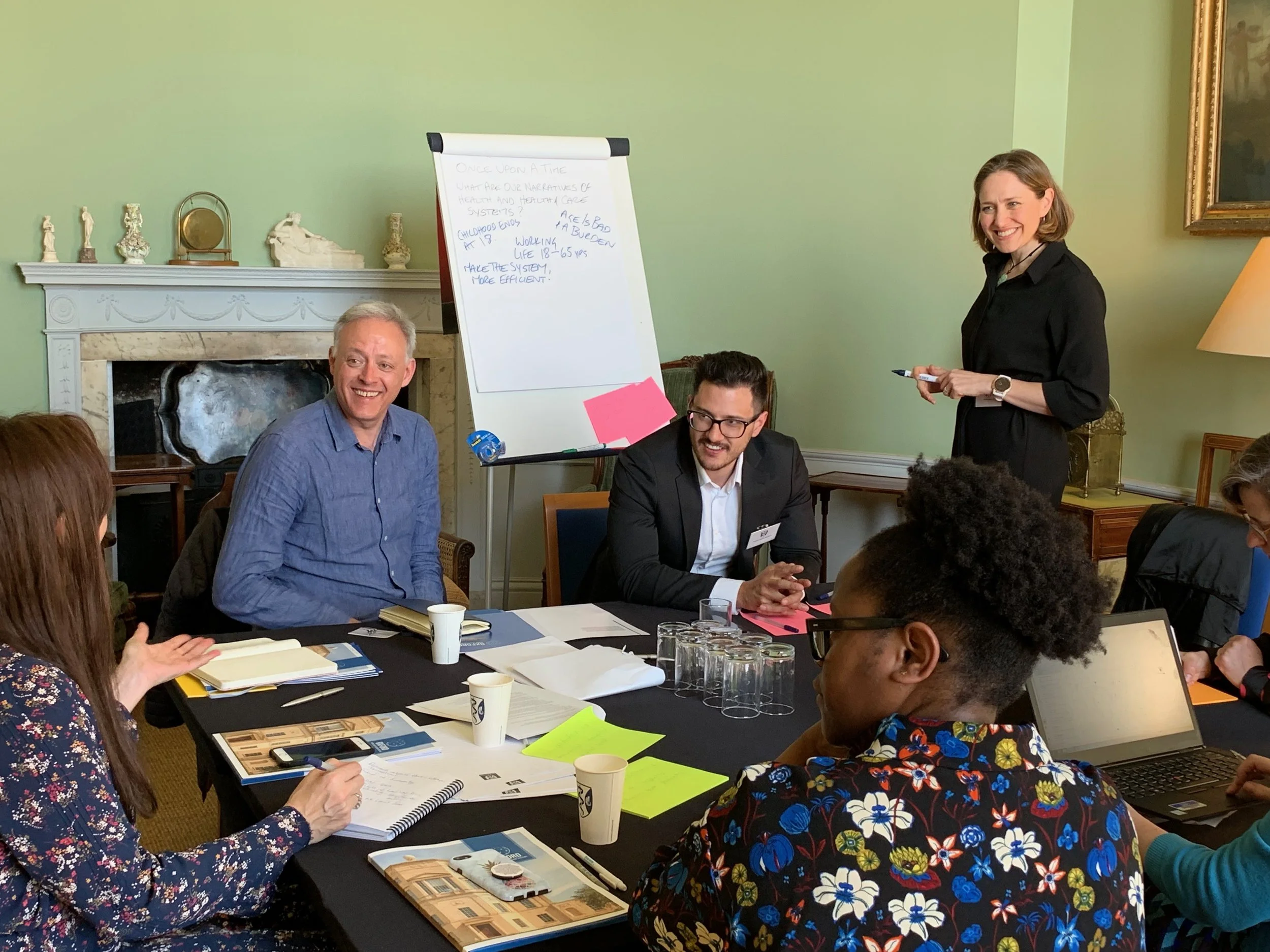
Image from a Green Templeton College event, illustrating intellectual life at GTC. Not a Strategic Philanthropy Course session.
Economic capital
Financial resources and assets that can be directed toward impact, including:
Philanthropy
Philanthropic capital is deployed capital without expectation of financial return or preservation of the principal.
Investments
Investing describes the allocation of capital with some expectation of financial return, typically including both the preservation of the principal and some form of financial gain. Impact investing seeks to realise impact returns alongside financial ones. More ambitious impact investments may involve financial return concessions in pursuit of greater impact. Those that forgo financial gains and aim only to partially recover the principal are typically referred to as catalytic investments.
Business
Most UHNW portfolios exist in the form of ownership of a private business. Some businesses can play an outsized role in the world around them, because of either their size, reach, or the stakeholders connected with it. When properly leveraged, they can be a tool for impact creation.

Image from a Green Templeton College event, illustrating intellectual life at GTC. Not a Strategic Philanthropy Course session.
Social capital
Social capital describes our connections and the reach and influence our networks and reputation carry in the world.
Personal connections
Direct relationships we have with individuals and groups. These ties tend to be strong and reliable, providing support and coordination for action.
Public positioning
The access that we have to wider audiences by positioning ourselves publicly. Examples of this include public speaking engagements, social media reach, or public relations approaches.
Reputation
Some names, typically family names, can carry a lot of weight. Depending on how we leverage them, there can be a positive impact derived from this, ranging from publicly endorsing an initiative or organization to actively contributing to their mission.

Career capital
Career capital encompasses everything we can do with our time and energy. The choices we make about how to spend our days offer some of the greatest opportunities to contribute to the world. Leveraging time and energy for impact falls into two buckets: skill development, where we grow as more effective change agents, and professional engagement, where we actively direct our time and energy toward impactful work.

Political capital
Political capital describes the strategic application of economic, social, and career capital to influence policy and shape systems by setting enforceable rules and public funding priorities. The focus is policy specifically: the rules and funding priorities that govern how systems operate, rather than electoral outcomes, party allegiances, or public opinion. Those systems sit beneath almost every cause area, which is why political capital matters well beyond work on state governance alone.
Policy changes the rules and public priorities that shape what many organisations, markets, and institutions do by default. With that, it can offer scale, durability, and system-wide effects that are difficult to reach with any other type of capital.
Political capital is harder to deploy well than most other forms of capital. Timelines are long, outcomes are highly contingent, and attribution is rarely clean. Success depends on context, the quality of implementation, and whether there is a viable path to influence within the institutions that matter. But when those conditions are present, even modest political capital can unlock effects that compound across entire systems.